How Lakeland job geometry shapes the choice
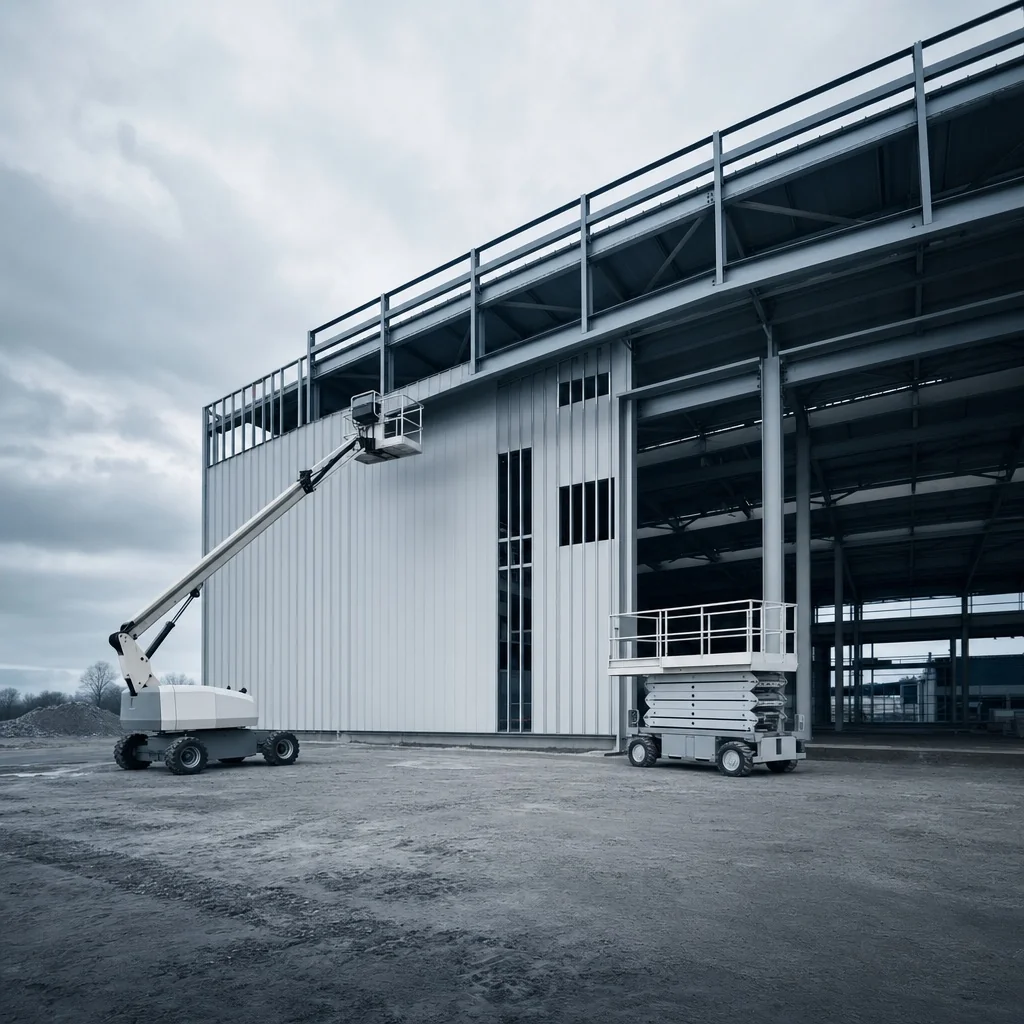
Local distribution buildings and medical facilities often have tall, open bays with polished slabs, narrow service aisles, and frequent racking or mechanical obstructions. If the platform can sit directly under the work, an electric slab scissor is typically the most space‑efficient option. Where the task sits behind conveyors, piping, or façade features, consider a boom lift for up‑and‑over reach instead of more vertical height.
Indoor humidity and slab considerations
In Central Florida, indoor spaces can run humid for much of the year. Electric slab scissors limit emissions and noise while protecting indoor air. When comparing units, look at: - Maximum platform height vs. ceiling or racking elevation - Machine width against aisle clearances and doorways - Floor loading where mezzanines or older slabs exist
High humidity also affects hydraulic performance expectations; build in time for pre‑use checks and allow for equipment rated for indoor work.
Outdoor ground and weather effects
Sandy soils and frequent rain can leave jobsites soft, uneven, or partially saturated. For exterior signage, envelope work, and site utilities, rough‑terrain scissor lifts offer wider tires, higher ground clearance, and more grade tolerance than slab units. Match platform height to the working face and plan for turning room around staging, fencing, or laydown areas.
Narrowing the scissor category
Use these constraints to converge on a model: - Can the lift sit below the task without reaching over? If not, compare options at /aerial-lift-rental/ or /boom-lift-rental/. - Measure clear working height, then add a buffer for tools and decking. - Check aisle width, turning radius, and gate openings for interior routes; confirm ground firmness for exterior routes.
Related Lakeland equipment paths
- For interior facilities and warehouses: /electric-scissor-lift-rental/
- For exterior or unfinished sites: /rough-terrain-scissor-lift-rental/
- For up‑and‑over tasks: /boom-lift-rental/
Logistics‑ready planning
High‑bay aisles, sprinkler mains, and lighting runs create repeatable access patterns. Standardize on a platform height that clears typical service points, then reserve larger units only for exceptional elevations to reduce handling inside busy buildings.