Define the placement geometry
- Where must the load land: ground level, second floor, or rooftop edge?
- How far back must the machine stage from the drop point due to soft shoulders, curbs, or barricades?
- Are there overhead limits on the travel route to staging?
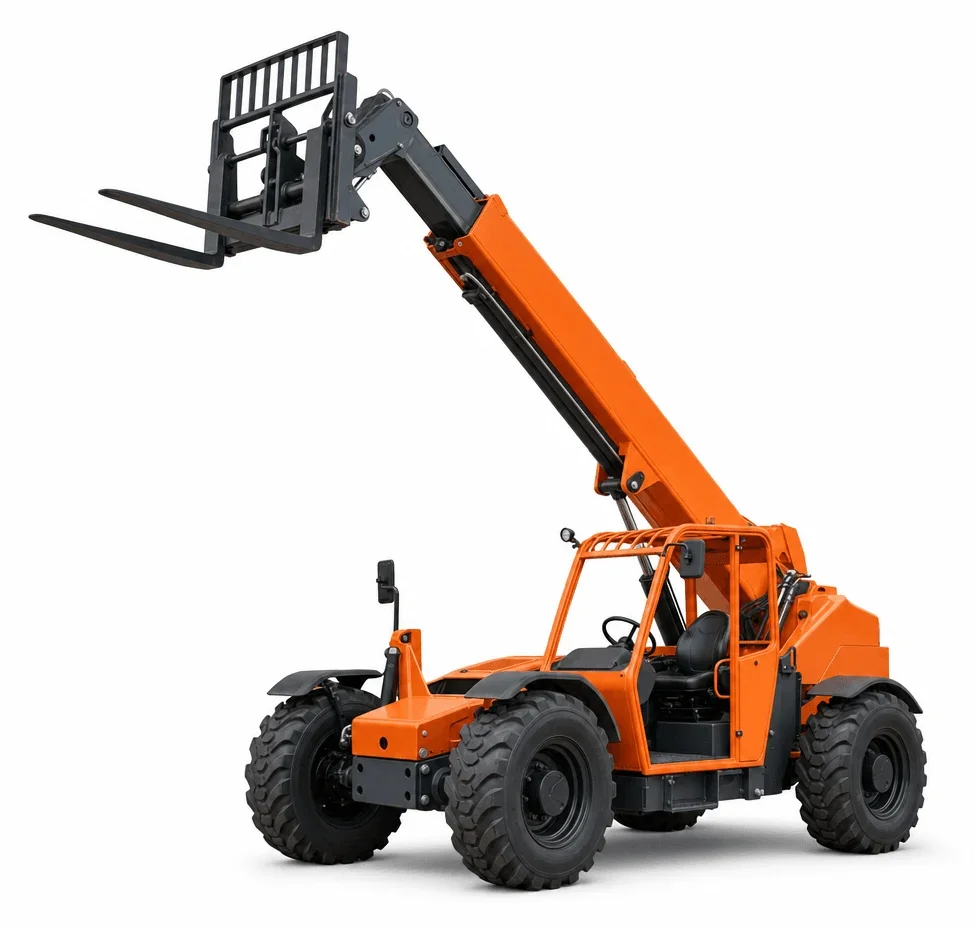
Lift charts change with boom extension and load weight. Heavier units do not guarantee the needed reach at height; the exact load and setback distance narrow the size and carriage needs.
Lakeland ground and weather considerations
- Seasonal rain can leave sandy subgrades saturated. A rough-terrain chassis manages uneven ground, but site procedures still govern bearing and slope limits.
- Humidity and heat drive frequent checks on hydraulic and electrical components during longer projects.
- Industrial sites along the regional corridor may require tight timing windows; plan material stacks so the telehandler can approach and exit without blocking active lanes.
Specs that matter
- Maximum lift height and forward reach at the target load weight.
- Carriage and fork length appropriate for pallets, pipe, or mixed bundles.
- Overall width and turning radius for navigating between storage, fences, and building corners.
When a telehandler fits better than a forklift
Choose a telehandler when the surface is uneven, the load must clear obstacles, or placement is elevated beyond typical forklift mast heights. For smooth indoor floors and tight aisles, a warehouse forklift remains more practical.
Related planning pages: - Indoor material moves: /forklift-rental/ - Perimeter task access: /telescopic-boom-lift-rental/ and /articulating-boom-lift-rental/ - Site essentials: /temporary-fencing-barricades-rental/ and /storage-containers-rental/
Actual conditions, the selected unit’s instructions, and site procedures determine safe setup and operation at height.