What narrows the scissor lift choice in Lakeland
Decisions usually start with height and footprint, then get shaped by building type and weather. In local distribution buildings, racking aisles, sprinkler mains, and mezzanine edges constrain platform size and turning radius. In medical offices and clinics, floor coverings, sensitive equipment, and quiet-hour maintenance push toward low-emission, slab‑rated units. Outdoors, saturated sandy soil after frequent rains changes how a machine carries weight and whether it can traverse unfinished grades.
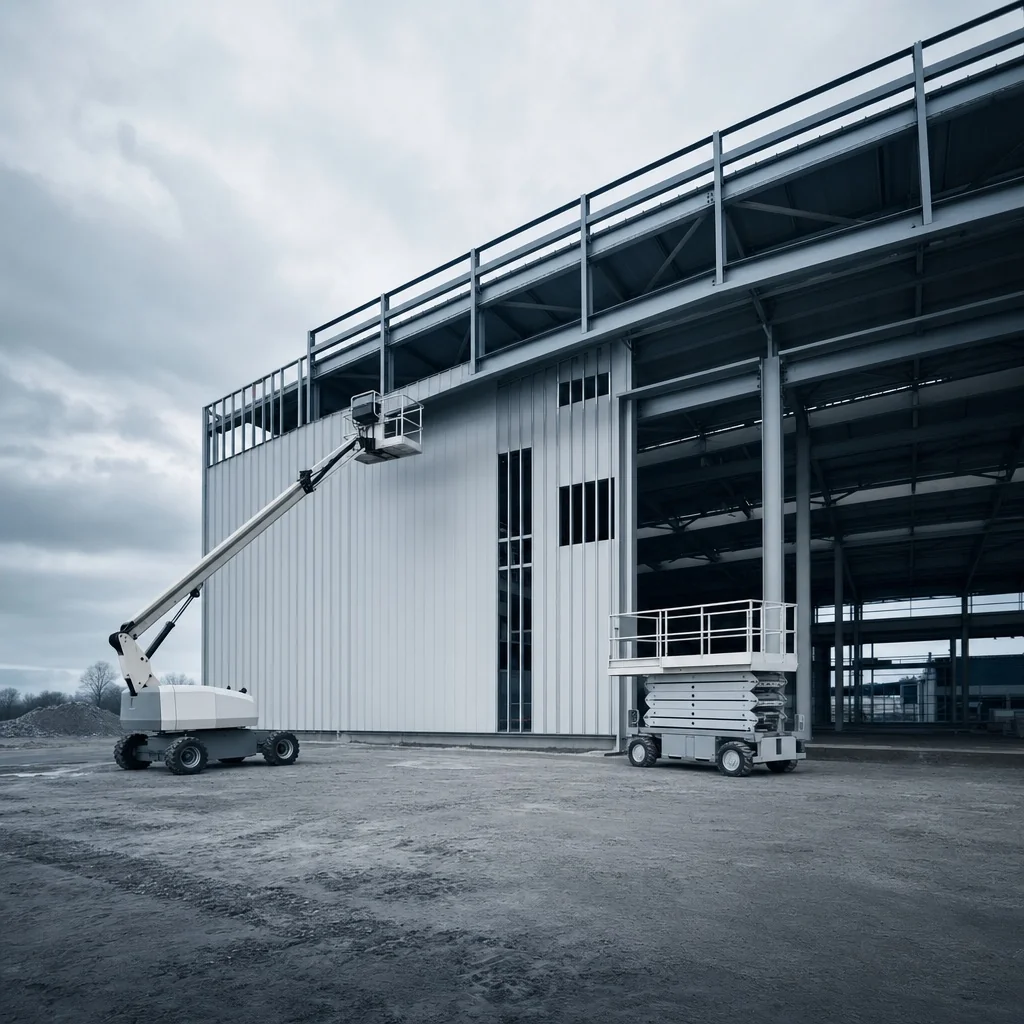
Key dimensions and constraints that typically sort the class: - Can the machine sit below the task or must it outreach around obstacles? If outreach is required, compare scissor platforms to options at /aerial-lift-rental/ or /boom-lift-rental/. - Maximum working height versus travel height under door headers and dock seals. - Slab rating, wheel load, and point load relative to interior floors and elevated slabs. - Ventilation and moisture exposure affecting battery and hydraulic systems during high-humidity periods. - Outside pad conditions where rough‑terrain features may be needed; see /rough-terrain-scissor-lift-rental/.
Logistics‑ready considerations
High-bay aisles and frequent dock transitions create repetitive up/down cycles and tight maneuvering. That pushes value toward electric scissor lifts with compact platforms and precise steering, covered at /electric-scissor-lift-rental/. For ceiling work over active aisles, platform capacity and deck extension length influence whether technicians can reach above conveyor or lighting rows without repositioning.
Healthcare and campus maintenance
In clinical spaces, cleanliness requirements and low-noise expectations favor non-marking tires and slab‑rated lifts. Short overnight windows and sensitive finishes mean transport width, turning radius, and curb weight matter as much as height. Where tasks sit over corridors or reception areas, a vertical mast at /vertical-mast-lift-rental/ may fit better than a wide-deck scissor.
Outdoor builds and storm season
Sustained rainfall can leave sandy subgrades soft. For exterior envelope work, parking lots under construction, or utility yards, ground bearing and traction define the choice between slab units and rough‑terrain scissors. When grade, reach-around, or obstacle clearance becomes the issue rather than straight vertical access, consider /articulating-boom-lift-rental/ or /telescopic-boom-lift-rental/.
Actual site conditions, the selected unit’s instructions, and job procedures govern elevated work.